Touch Taiwan 2026 Report – EP1: Automotive Optoelectronics Trends and Pixelated Architecture
Link copied!
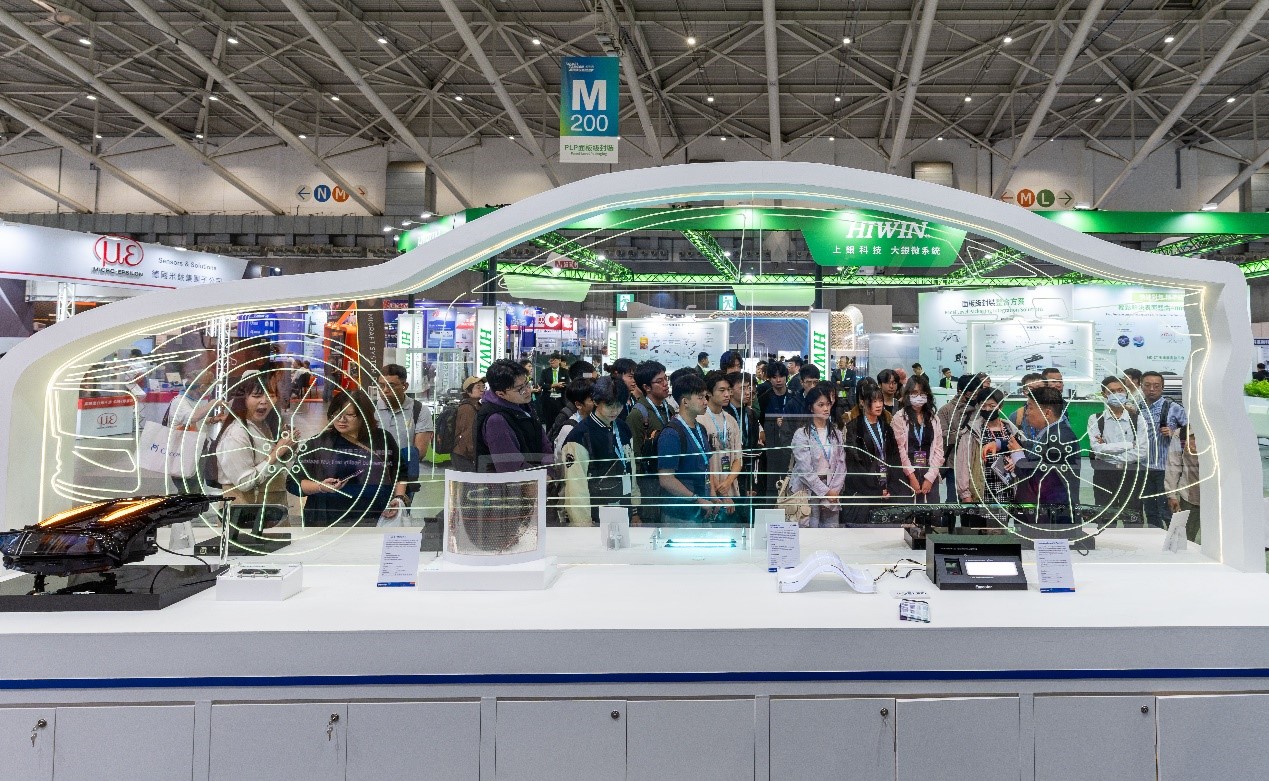
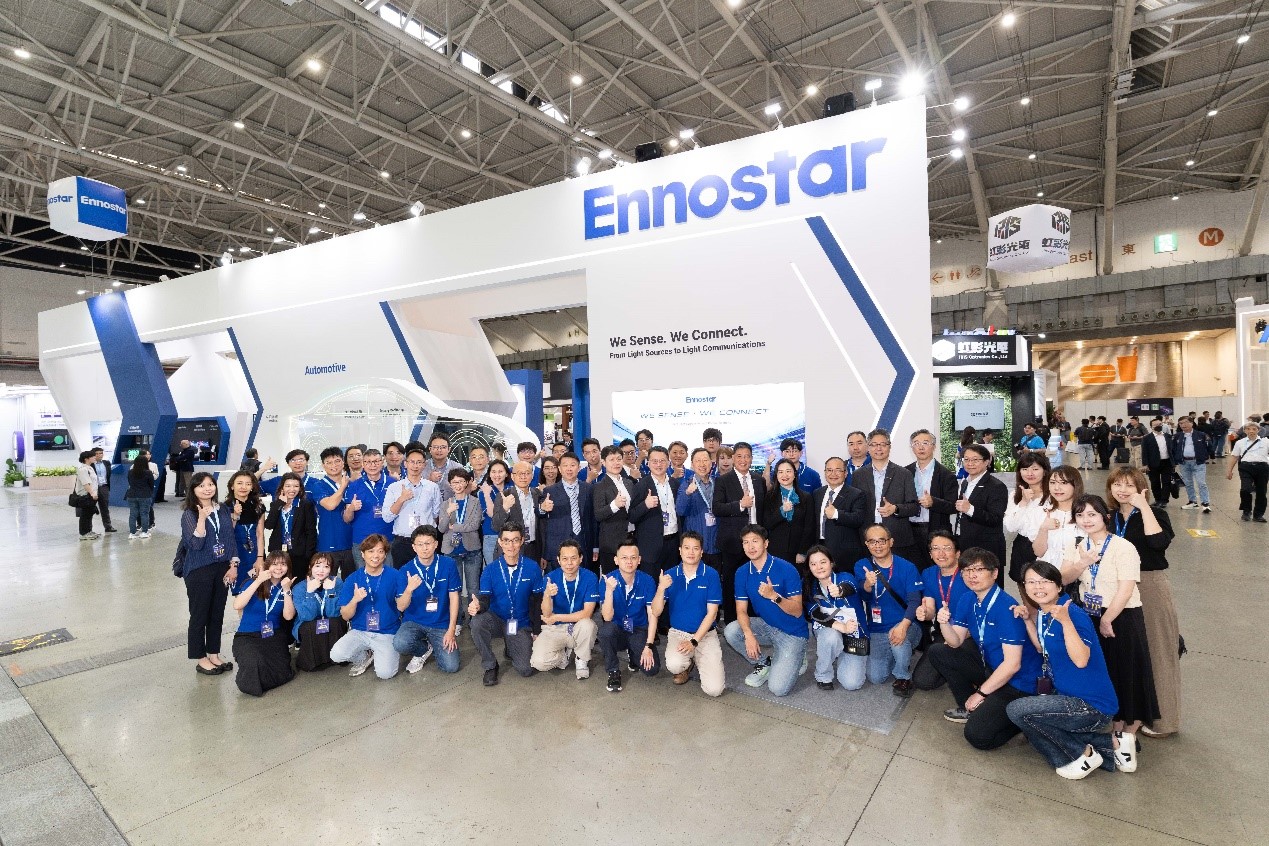
At Touch Taiwan 2026, Ennostar presented its latest developments in automotive optoelectronics under the booth theme “We Sense, We Connect,” reflecting its focus on linking sensing, display, and lighting technologies within a unified system approach. The exhibit placed particular emphasis on the progression of pixelated lighting architectures from concept to scalable implementation. Compared to earlier showcases, this year’s presentation highlighted system integration, manufacturability, and alignment with ongoing Tier-1 and OEM programs.
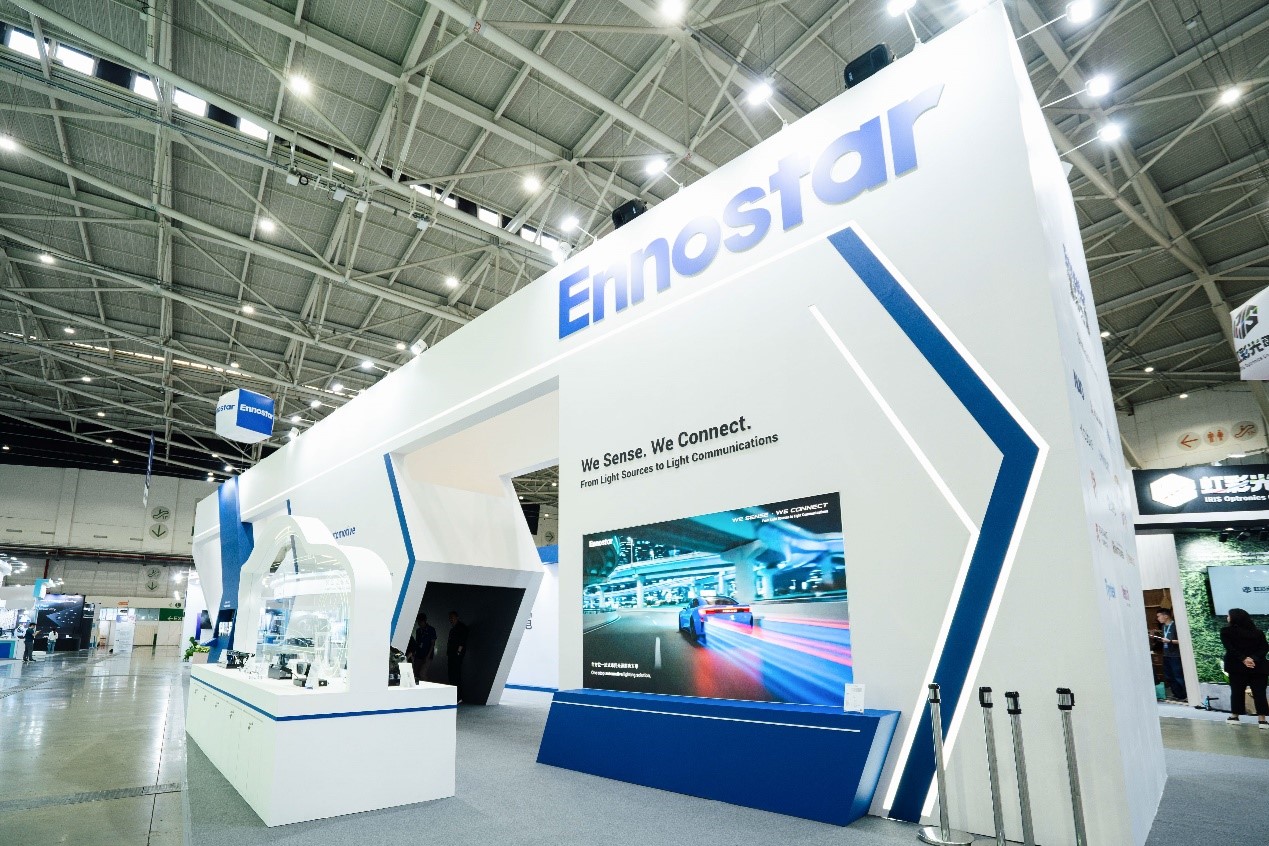
The overall direction reflects a broader industry shift: automotive lighting is evolving from a standalone illumination function into a multi-functional interface combining lighting, display, and communication.
This report reviews Ennostar’s key technologies and their implications from a system and industry perspective.
1. Automotive Lighting as a Communication Interface
One of the central themes across Ennostar’s exhibit is the transition of lighting systems toward vehicle-to-everything (V2X) communication interfaces.
The company’s newly presented platform integrates several applications:
• Intelligent Signal Display (ISD)
• Adaptive Driving Beam (ADB)
• Dynamic Ground Projection (DGP)
These are built on high-density LED arrays and supported by Ennostar’s TEMO (thermal-electrical-mechanical-opto) integration approach. This type of cross-domain engineering is essential as pixel density increases, bringing added complexity in thermal management, driving electronics, and optical performance.
Overall, the exhibit aligns with the industry trajectory of treating lighting as an active interface rather than a passive subsystem.
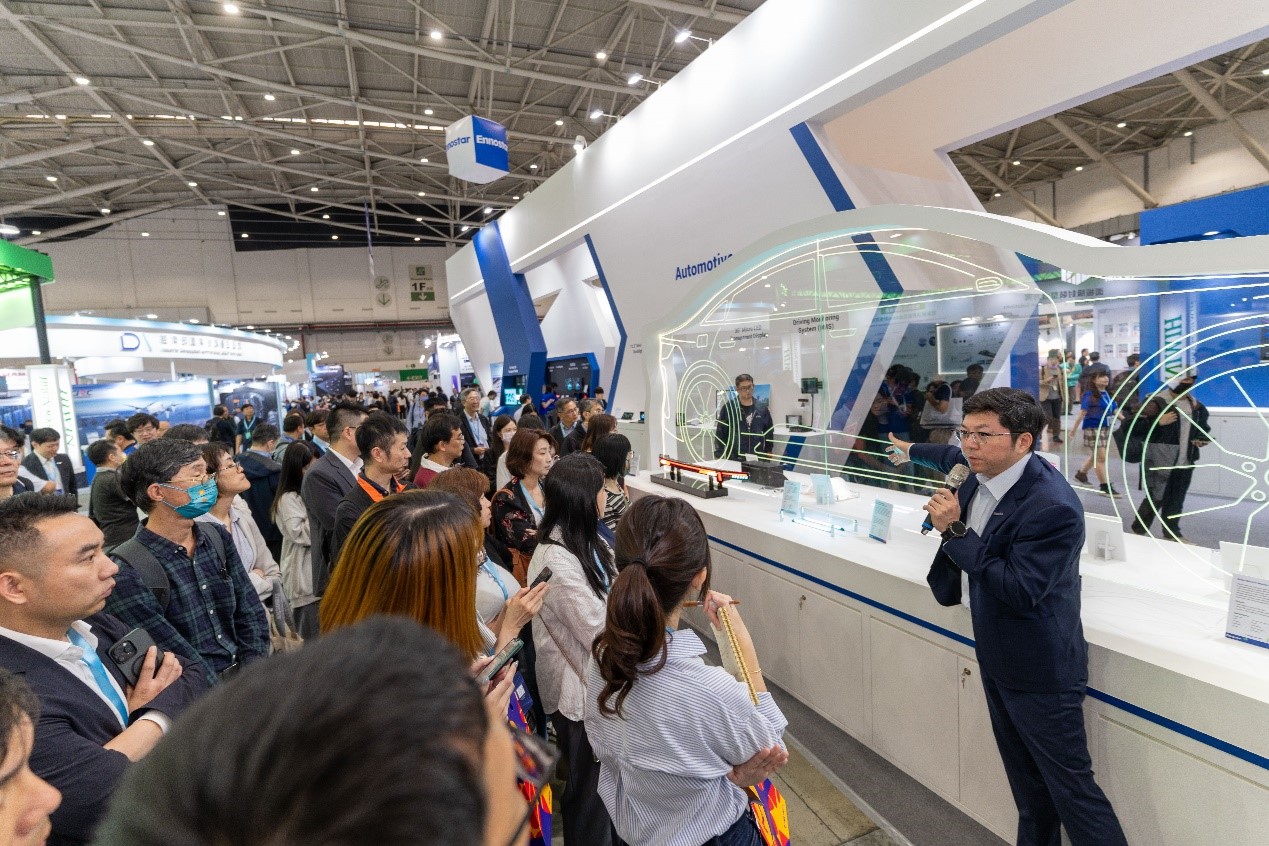
2. ISD: Exterior Lighting Moves Toward Display Functionality
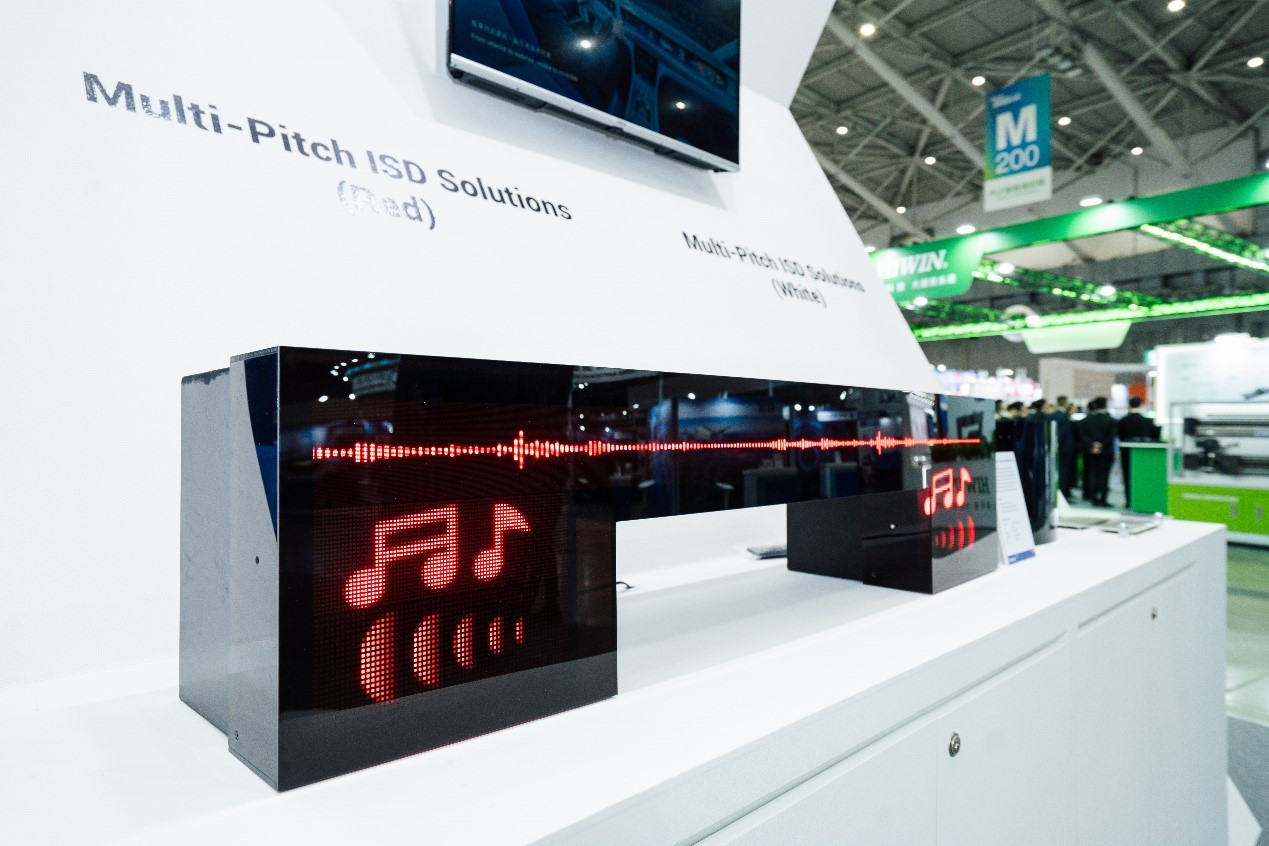
The Intelligent Signal Display (ISD) platform represents a clear example of the “displayization” of exterior lighting.
-Technical Characteristics
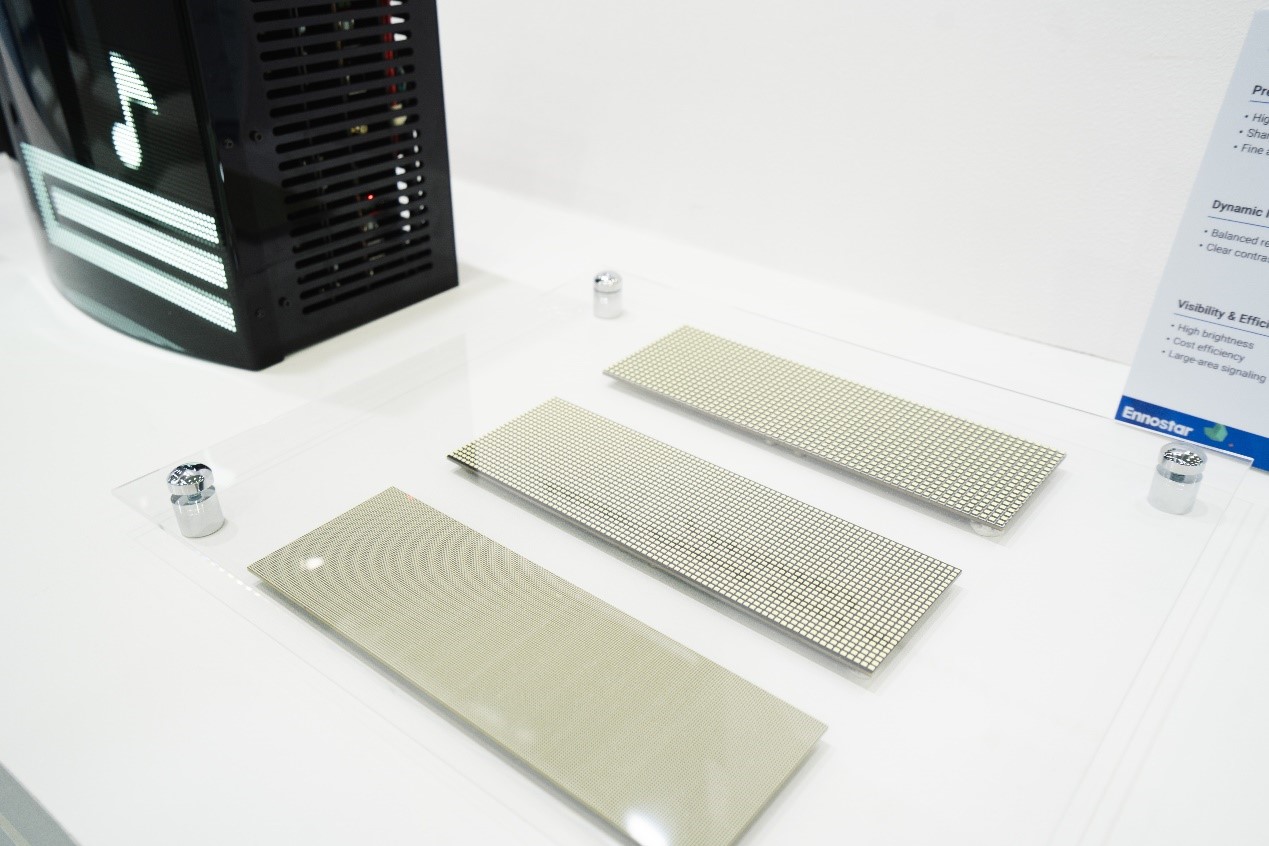
ISD modules utilize:
• Chip-on-Board (COB)
• Package-on-Board (POB)
with pixel pitches ranging from sub-1mm to 4mm, allowing different trade-offs between resolution, cost, and integration complexity.
Key features include:
• High brightness for outdoor visibility
• Modular design architecture
• Support for dynamic content (symbols, animations)
-Application Scope
Typical applications include:
• Rear signaling displays
• Front identity lighting
• External communication with pedestrians and other vehicles
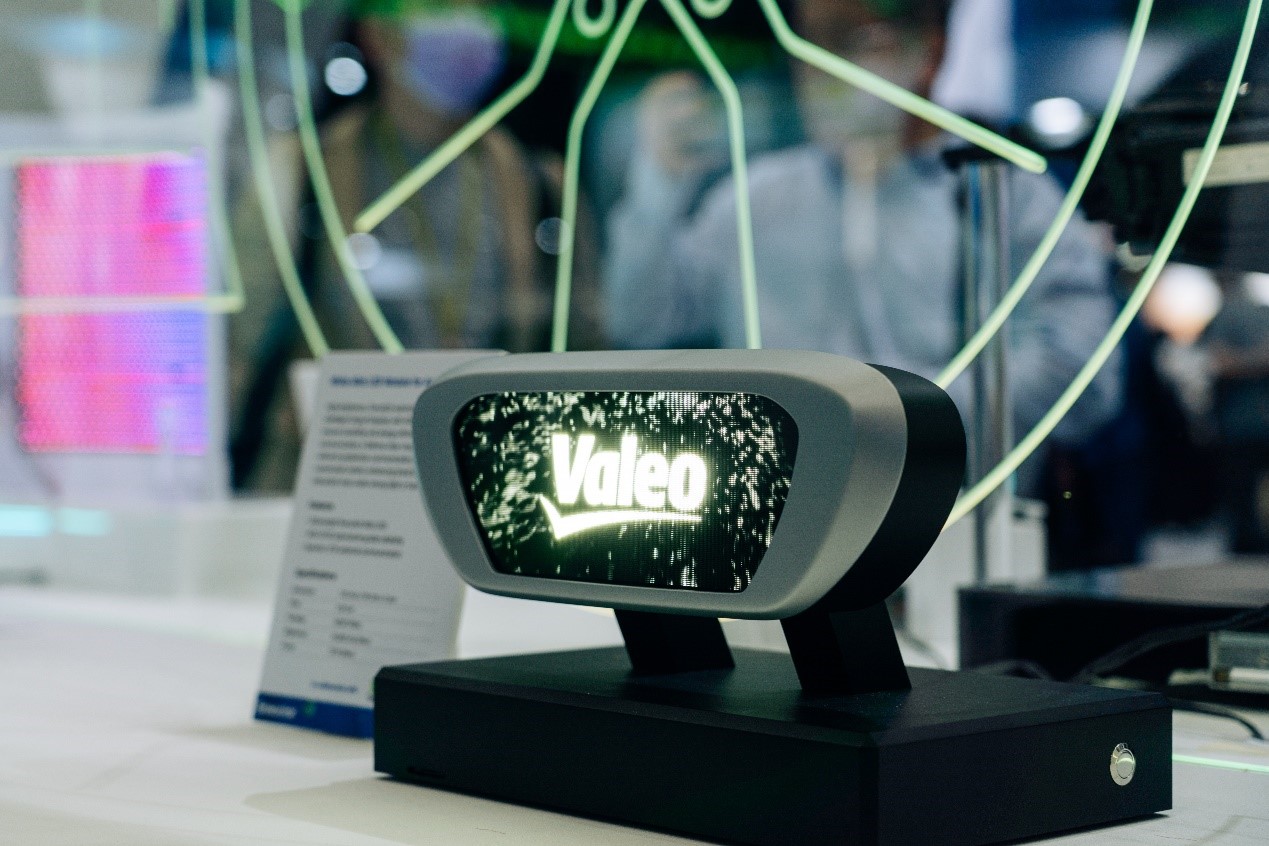
According to the exhibit, ISD solutions have already been integrated into projects with international Tier-1 suppliers and OEMs, including collaboration with Valeo. This suggests that such systems are moving beyond demonstration into early production adoption.
3. ADB: Increasing Resolution in Adaptive Lighting
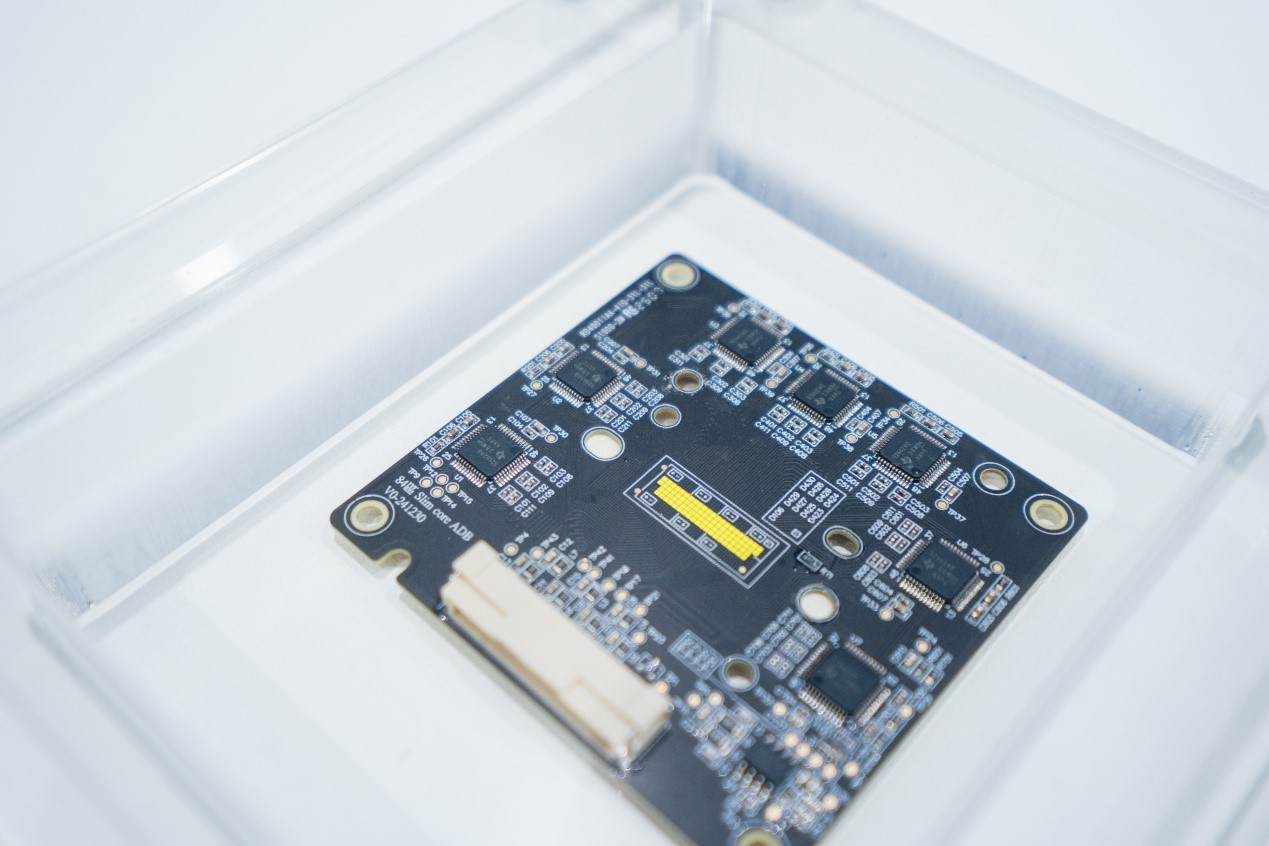
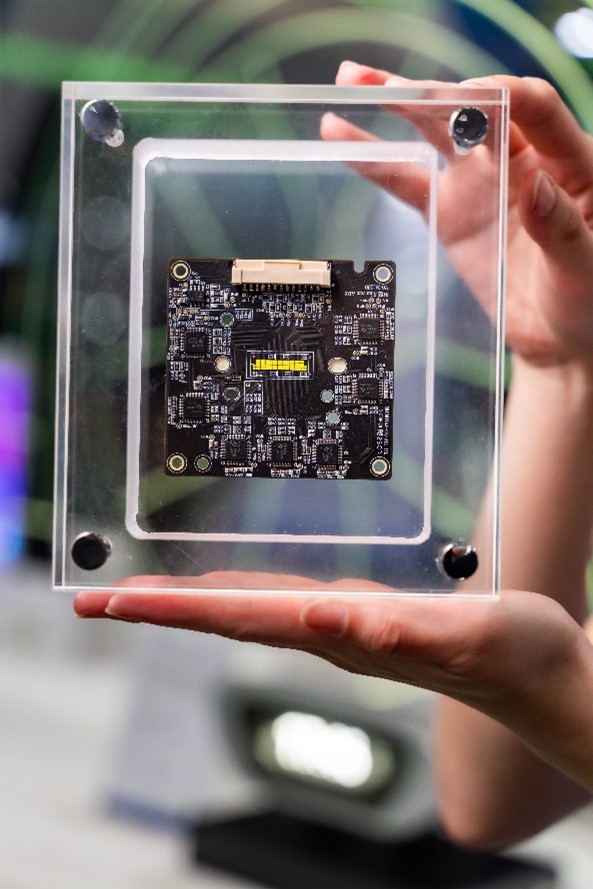
In functional lighting, Ennostar showcased its pixelated Adaptive Driving Beam (ADB) solution.
-Technical Approach
The system is based on:
• Slim Core LED technology
• Approximately 60 μm chip spacing
This enables higher-density LED arrays, improving:
• Beam shaping resolution
• Glare control precision
• Dynamic adaptability
-Industry Context
Compared with conventional matrix LED systems, higher pixel density allows finer control of the light distribution. It also creates opportunities to integrate multiple functionalities within a unified architecture, reducing system fragmentation.
This reflects a broader trend toward multi-functional lighting platforms rather than discrete subsystems.
4. Turquoise Marker Light: Alignment with Autonomous Driving Standards
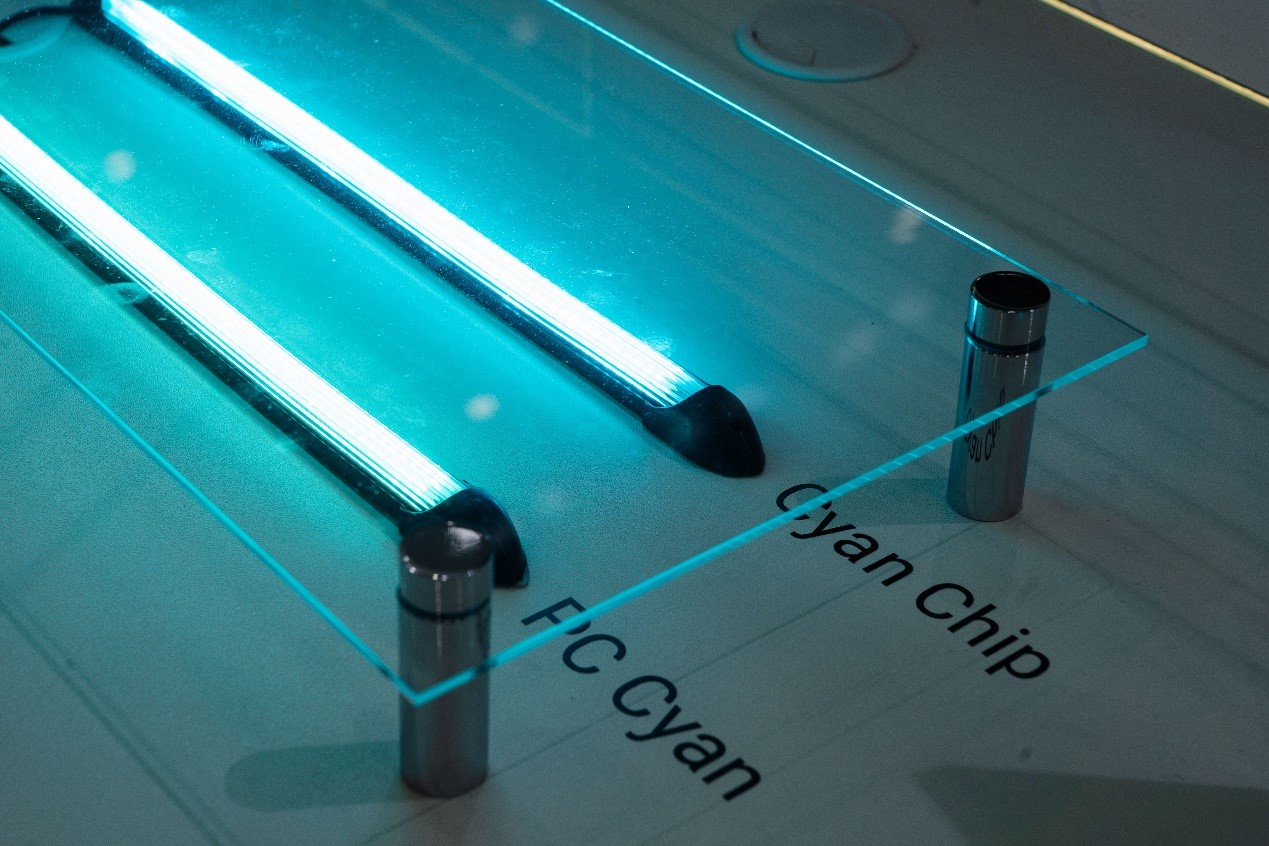
Another notable exhibit was the turquoise (cyan) marker light, developed in accordance with SAE J3134.
-Technical Options
Ennostar offers two implementation approaches:
• Direct cyan LED chips (Cyan Chip)
• Blue chip with phosphor (PC Cyan)
This dual-path strategy allows flexibility between performance optimization and cost considerations.
-Industry Relevance
Standardized signaling colors are expected to play a role in autonomous driving, helping communicate vehicle status to surrounding road users. The development of turquoise lighting solutions reflects ongoing efforts toward visual standardization in automated mobility.
5. Interior Applications: Convergence of Lighting, Display, and Sensing
In addition to exterior systems, Ennostar presented several interior solutions, highlighting further integration trends.
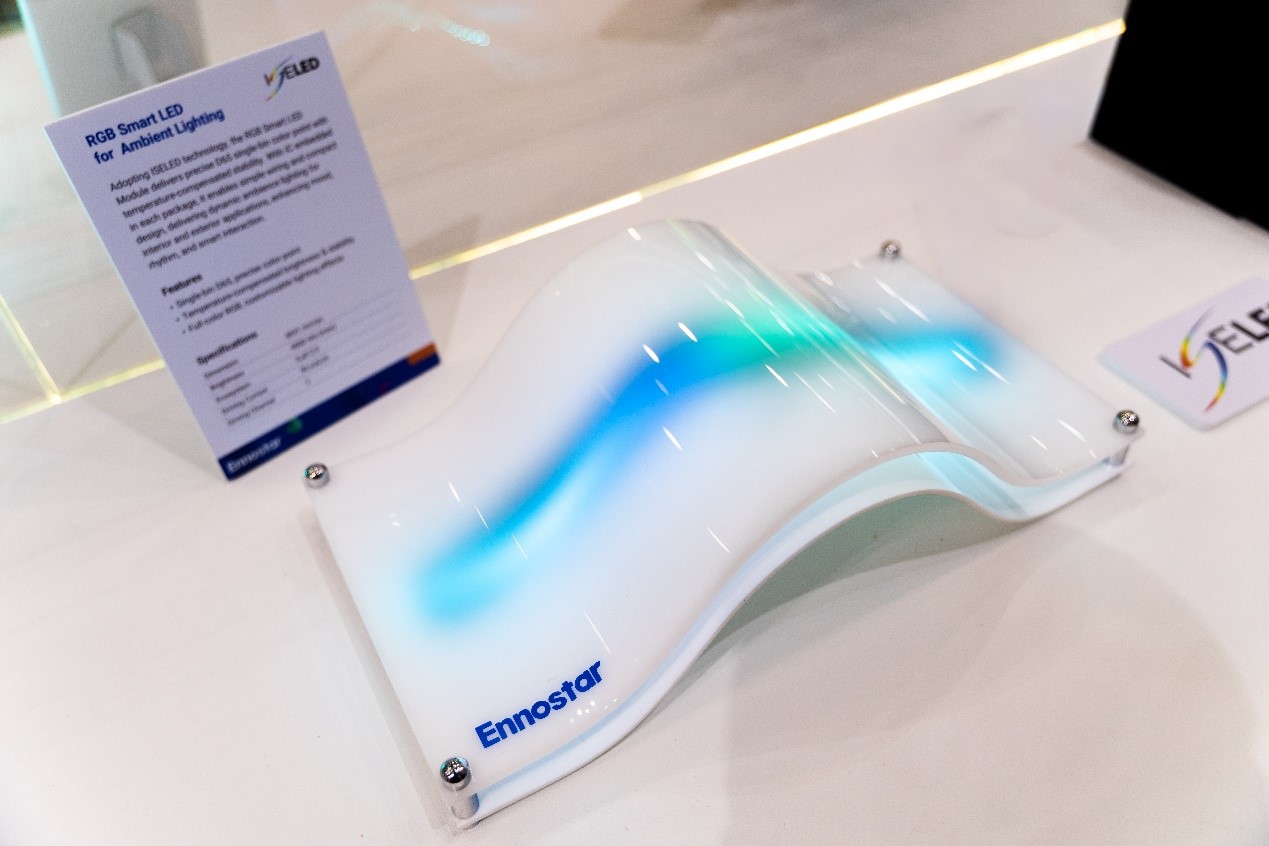
-Display and Ambient Lighting
Key technologies include:
• Ultra-thin display backlighting with Full Array Local Dimming (FALD)
• Multi-color smart LEDs with temperature compensation
These solutions emphasize:
• Color consistency
• Energy efficiency
• Integration with display systems
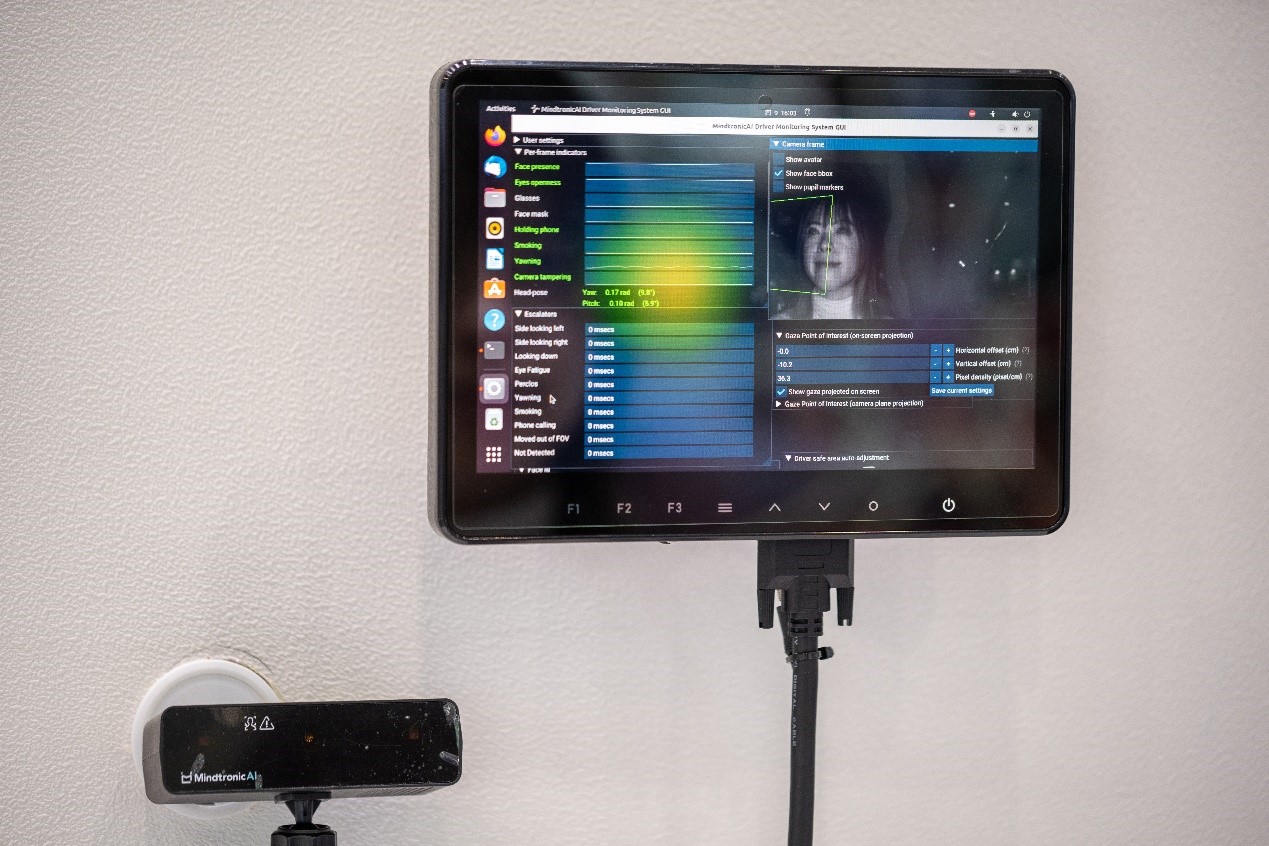
-DMS / OMS Sensing
For in-cabin sensing, Ennostar demonstrated:
• IR LEDs and VCSELs with multiple beam angles
• Compliance with IEC 62471 eye-safety standards
Applications include:
• Driver Monitoring Systems (DMS)
• Occupant Monitoring Systems (OMS)
This reflects the increasing role of optoelectronics in sensing and safety functions within the vehicle cabin.
6. From Component Supplier to System-Level Integration
A key observation from the exhibit is Ennostar’s strategic shift from component-level supply toward system-level solutions.
This includes:
• Modular platform design
• Integration across optical, electrical, and thermal domains
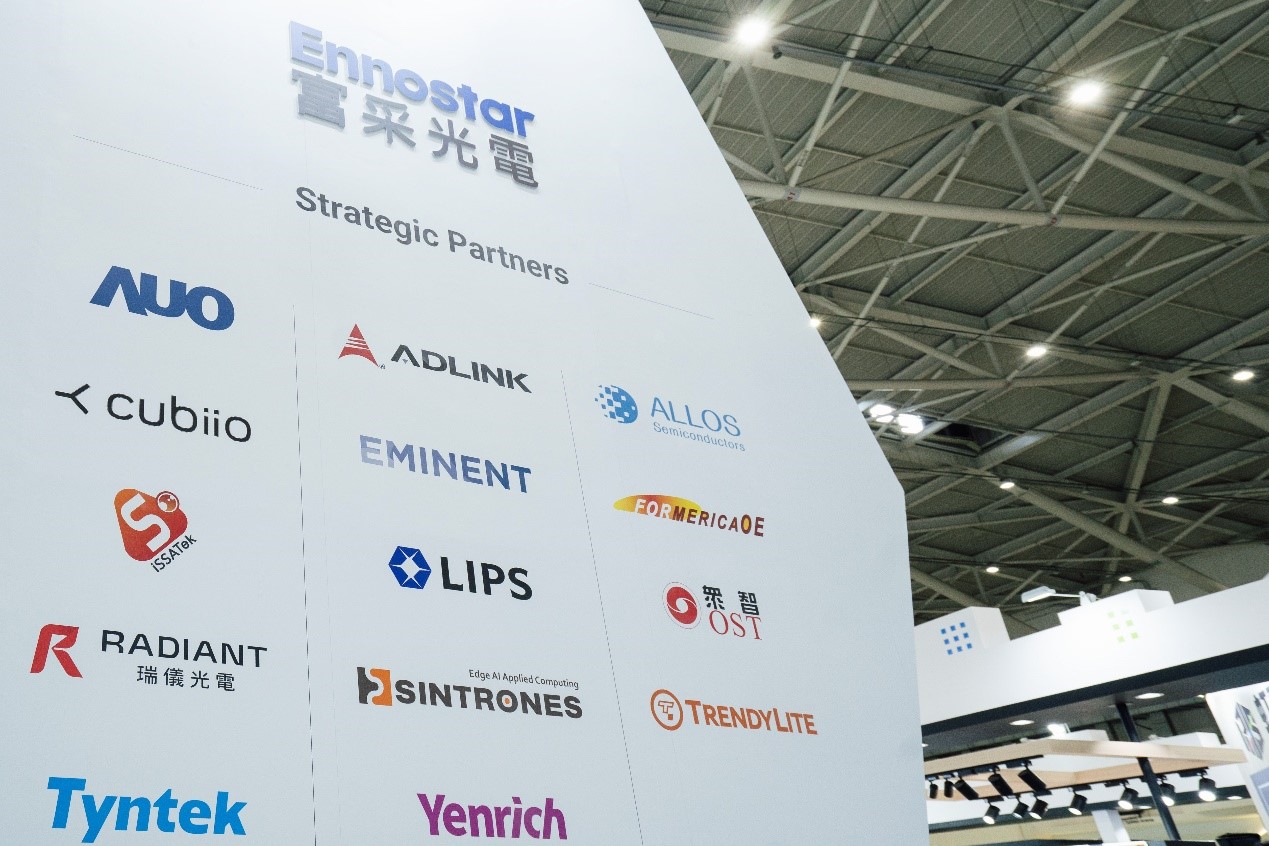
• Collaboration with Tier-1 suppliers and OEMs
As automotive lighting systems become more complex, OEM expectations are evolving. Suppliers are increasingly required to provide not only components, but also integrated, application-ready solutions.
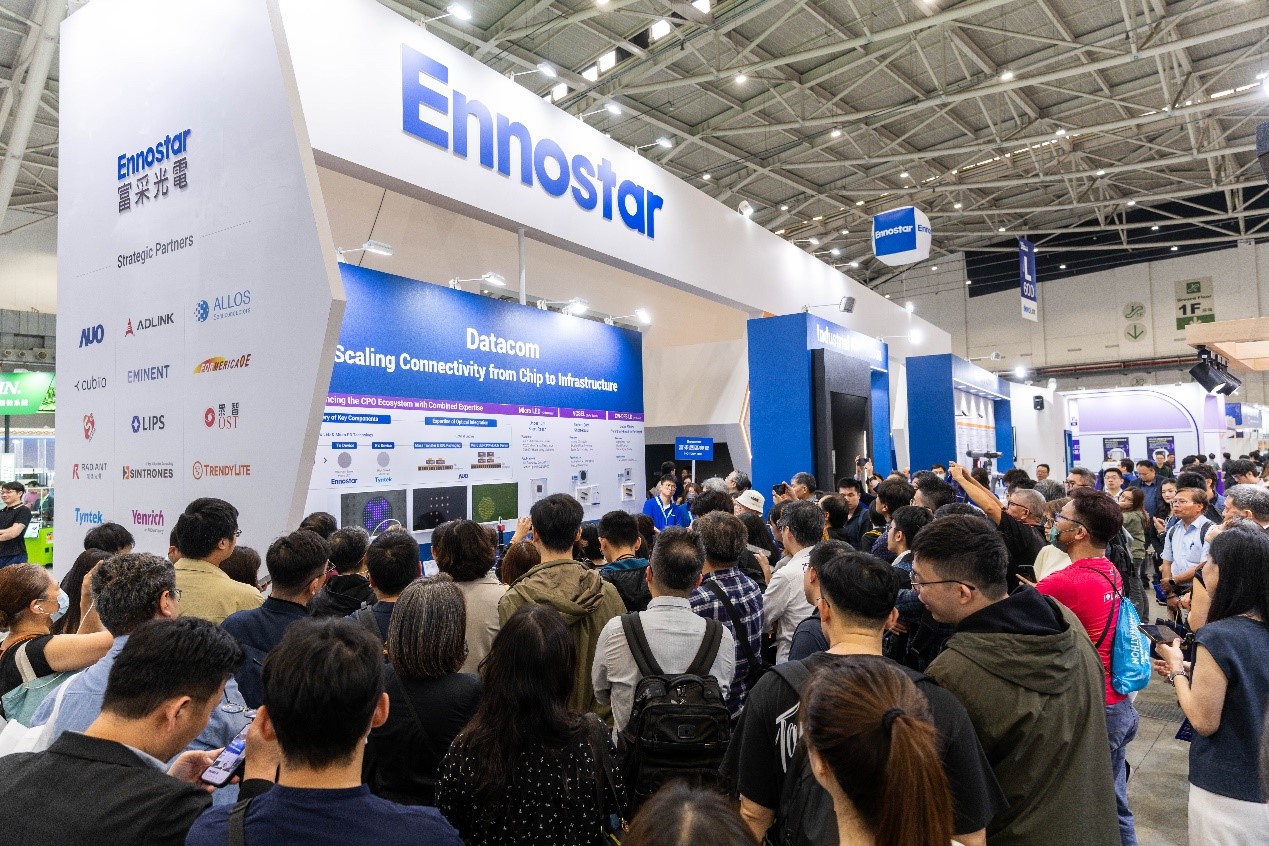
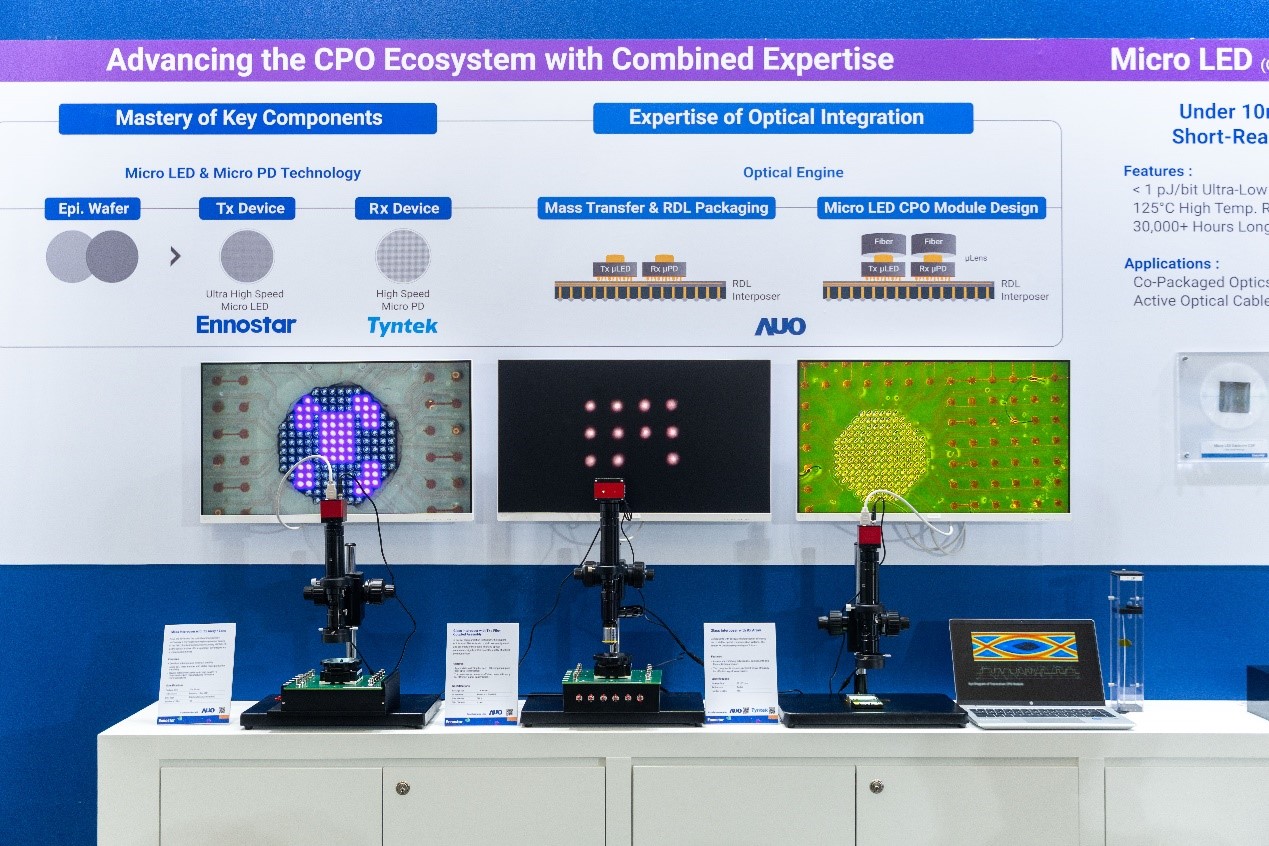
Beyond automotive, Ennostar also presented technologies in datacom, sensing and automation, and Mini/Micro LED. These included optical components for data transmission, sensing solutions for industrial and robotics applications, and display-related developments, reflecting a broader expansion across optoelectronic applications.
Conclusion: Pixelation and Integration as Key Industry Directions
Ennostar’s showcase at Touch Taiwan 2026 reflects several broader trends in automotive lighting:
1. Pixelated architectures are becoming foundational across signaling, projection, and adaptive lighting
2. Lighting is evolving into a communication interface, particularly in V2X and eHMI contexts
3. System integration capabilities are becoming critical, spanning multiple engineering domains
4. Production readiness is improving, with growing evidence of real-world program integration
Automotive lighting is evolving from a functional subsystem into a platform integrating illumination, display, and sensing. Ennostar’s exhibit indicates this shift is moving toward scalable implementation and near-term adoption.
Readers can visit Ennostar’s Touch Taiwan 2026 event site for more at https://www.ennostar.com/en/event/2026TouchTaiwan, or watch the short video: https://youtu.be/7hde_QUzjHw?si=QRzOv8QVKnkYA2-w